
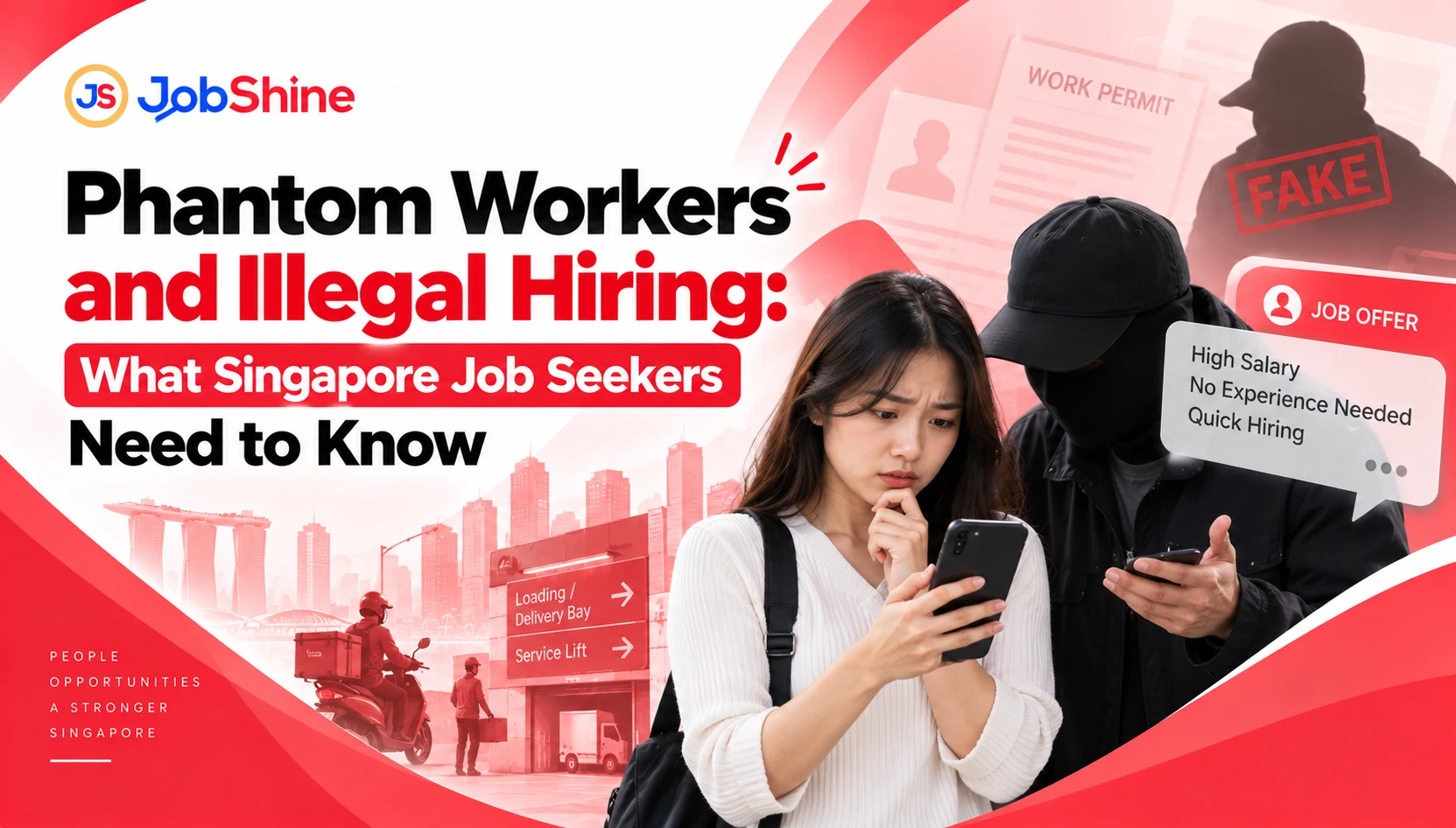
Finding a job in Singapore can be an important opportunity for workers — but job seekers should also understand the risks surrounding illegal employment arrangements.
In September 2026, Singapore's Ministry of Manpower (MOM) arrested four people in a case involving suspected employment-related offences, including alleged use of "phantom workers" to manipulate foreign worker quotas.
The case involved two company directors and two company staff from the construction sector, with another 21 people assisting with investigations.
The case provides an important reminder: not every employment arrangement is legitimate — and workers should understand what they are agreeing to.
A phantom worker is someone whose employment is recorded on paper even though the person does not actually work for the company.
According to MOM, the companies under investigation allegedly made fraudulent CPF contributions to local people who were not actually employed by them — allegedly to inflate the companies' foreign worker quotas, allowing them to bring in more migrant workers.
This is not simply an administrative mistake. MOM is investigating the arrangement as a potential offence under the Employment of Foreign Manpower Act.
Phantom worker arrangements are a serious legal matter — for employers and for the workers involved.
Some workers may assume that employment-related paperwork is only the employer's responsibility.
But certain arrangements can expose workers themselves to legal risk.
MOM specifically reminded members of the public not to accept CPF contributions from businesses they are not working for. People who participate in fraudulent arrangements may potentially face prosecution for aiding false declarations.
This is particularly important for job seekers who may be offered money in exchange for allowing a company to use their employment or CPF details.
If a company asks you to:
— treat the situation as a serious warning sign.
A legitimate job should involve an actual employment relationship. If it doesn't, walk away.
The phantom worker case is only one example of why job seekers need to be careful. Other warning signs may include:
Unclear employer identity
You should know which company is actually employing you.
Unclear salary arrangements
Be cautious when salary terms are vague or significantly different from what was originally advertised.
Requests for suspicious payments
Be careful if you are asked to make unusual payments connected to getting or keeping a job.
Pressure to sign documents you don't understand
Take time to understand employment documents before agreeing to them.
Job duties that don't match the offer
If the actual work is significantly different from what you were promised, ask questions before continuing.
Singapore's workforce includes many migrant workers across construction, manufacturing, marine, logistics, services, and other industries.
Employment arrangements involving foreign workers are subject to specific work-pass requirements — and MOM continues to conduct enforcement operations against companies suspected of abusing the foreign worker system.
In the latest case, MOM said it would continue taking action against companies suspected of inflating foreign worker quotas through illegal arrangements.
The consequences of participating in illegal employment arrangements are serious:
Workers should not treat questionable employment arrangements as harmless shortcuts — the penalties are real and serious.
The issue is not limited to traditional construction or factory jobs.
MOM has also been monitoring illegal foreign participation in platform-based food and parcel delivery — including a syndicate involving modified apps and accounts where foreign workers rented local platform workers' accounts to work illegally.
This is another reason workers should protect their accounts and personal employment information at all times.
Before accepting any offer, check:
1. Who is the employer?
Make sure you know the actual company hiring you.
2. What job are you being hired to do?
The job description should match the actual position.
3. What is the salary?
Understand the basic salary, allowances, overtime, and other relevant terms.
4. What documents are you signing?
Do not sign documents you do not understand.
5. Are you actually going to work for the company?
If the answer is no — do not allow the company to represent you as its employee.
MOM provides channels for reporting suspected employment infringements, including issues involving migrant workers and phantom workers.
MOM states that reports are treated seriously and that confidentiality can be requested. However, people should make a report when they are certain that an infringement has been committed — rather than simply based on suspicion.
If something feels wrong about an employment arrangement, trust that instinct — and report it.
A job offer should provide an opportunity — not create a legal problem.
Workers should not feel pressured to accept arrangements they do not understand simply because they need employment.
A legitimate recruitment process should be transparent about:
Who is hiring → What is the job → How much is the pay → What are the working conditions → What documents are required
Know the employer. Know the job. Know the terms — before you say yes.
At Jobshine, the goal is to help workers discover genuine opportunities across Singapore — making the job-search process easier and safer to navigate: www.jobshine.sg
#Recruitment #JobSeekers #Employment #MigrantWorkers #SingaporeJobs #Workforce #JobShine

