
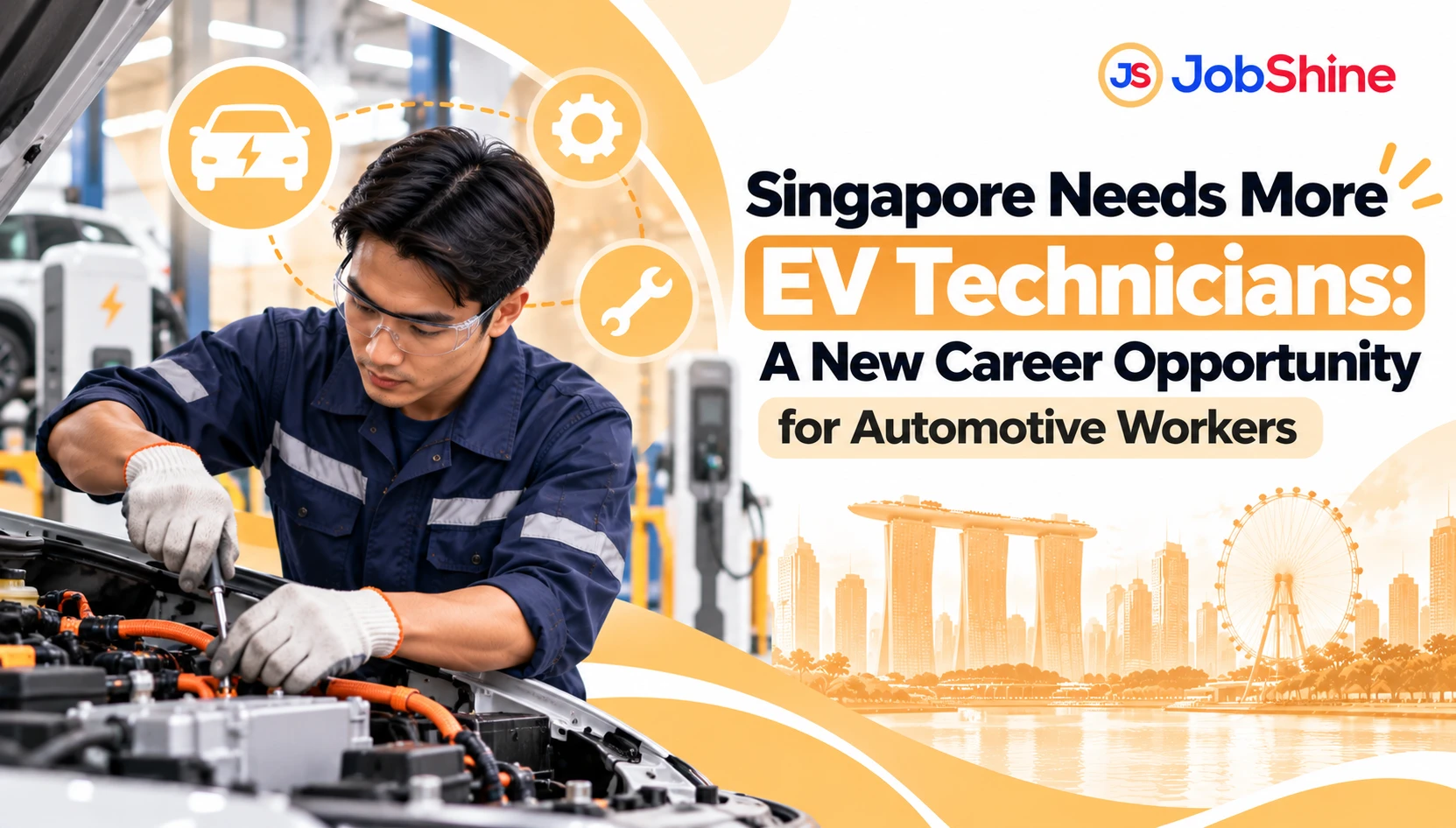
Singapore’s transition to electric vehicles (EVs) is creating a new challenge for the automotive industry: finding enough workers with the skills to maintain and repair electric cars.
On 6 October 2026, a report highlighted the shortage of EV servicing experience among Singapore’s professional mechanics. Temasek Polytechnic and automotive company Volt Auto are preparing to address this gap through a specialised EV training academy, with training scheduled to begin in the October 2026 semester.
For workers with automotive experience, this development could open new career opportunities beyond traditional vehicle maintenance.
Electric vehicles have different maintenance requirements from conventional petrol and diesel vehicles.
Although EVs still require tyres, brakes, suspension, and other mechanical components to be serviced, their high-voltage electrical systems and battery technology require specialised knowledge.
Technicians may need to understand:
As more electric vehicles enter the market, workshops need workers who can safely diagnose problems and maintain these vehicles.
The challenge is ensuring the workforce develops the right skills at the same pace as the technology — and right now, there’s a gap.
The Temasek Polytechnic–Volt Auto EV Academy aims to develop practical, industry-relevant EV skills for students and working adults through:
The programme is not limited to traditional mechanics. It also aims to prepare workers for related positions, including:
The growth of electric mobility creates work across an entire automotive service ecosystem — not just vehicle repair.
Not necessarily.
Some positions require substantial technical expertise or specific qualifications — while others focus on vehicle inspection, customer support, detailing, or service operations.
For someone already working in an automotive workshop, the first step could be upgrading existing skills rather than starting a completely different career:
You don’t have to start from scratch. For many automotive workers, the next step is an upgrade — not a restart.
Workers interested in this sector can start by focusing on four key areas:
1. Technical Foundations
Understand basic electrical systems, vehicle components, and diagnostic procedures — the foundation for any EV-related role.
2. Safety Awareness
EV servicing requires appropriate procedures for working around high-voltage components. Training and authorisation are essential for tasks that involve these systems.
3. Digital Literacy
Modern vehicles rely on electronic control systems, diagnostic software, and digital tools — comfort with technology is increasingly important.
4. Continuous Learning
Vehicle technology continues to evolve — workers must be prepared to update their knowledge throughout their careers, not just at the start.
The most valuable EV technician won’t be the one who learned everything once. It will be the one who keeps learning as the technology changes.
Automotive businesses cannot depend solely on recruiting workers who already possess every EV-related skill.
As the technology changes, employers may need to combine recruitment with training, mentoring, and partnerships with educational institutions.
This can help existing employees transition into new responsibilities while building a stronger talent pipeline for future demand.
Employers should also make job requirements clear — candidates need to know which qualifications, practical experience, and safety competencies are required before accepting a position.
Workforce development is not a side task for automotive employers — it is how they stay competitive as EVs become the norm.
The EV transition is changing the skills needed in Singapore’s automotive workforce.
The future of automotive work is not only about electric vehicles. It is also about the people who know how to maintain, inspect, and support them.
Your next opportunity may begin with upgrading the skills you already have.
Jobshine helps job seekers discover employment opportunities across Singapore. As industries evolve, understanding emerging skills can help workers identify their next career move: www.jobshine.sg
#SingaporeJobs #JobsInSingapore #SingaporeJobMarket #AutomotiveJobs #EVJobs #ElectricVehicles #EVTechnician #AutomotiveTechnician #MechanicJobs #TechnicianJobs #MaintenanceJobs #VehicleMaintenance #EVTechnology #ElectricMobility #AutomotiveIndustry #TechnicalSkills #SkilledWorkers #TechnicalJobs #Upskilling #SkillsDevelopment #CareerOpportunities #BlueCollar #Recruitment #Hiring #WorkforceDevelopment #JobSeekers #JobShine

