
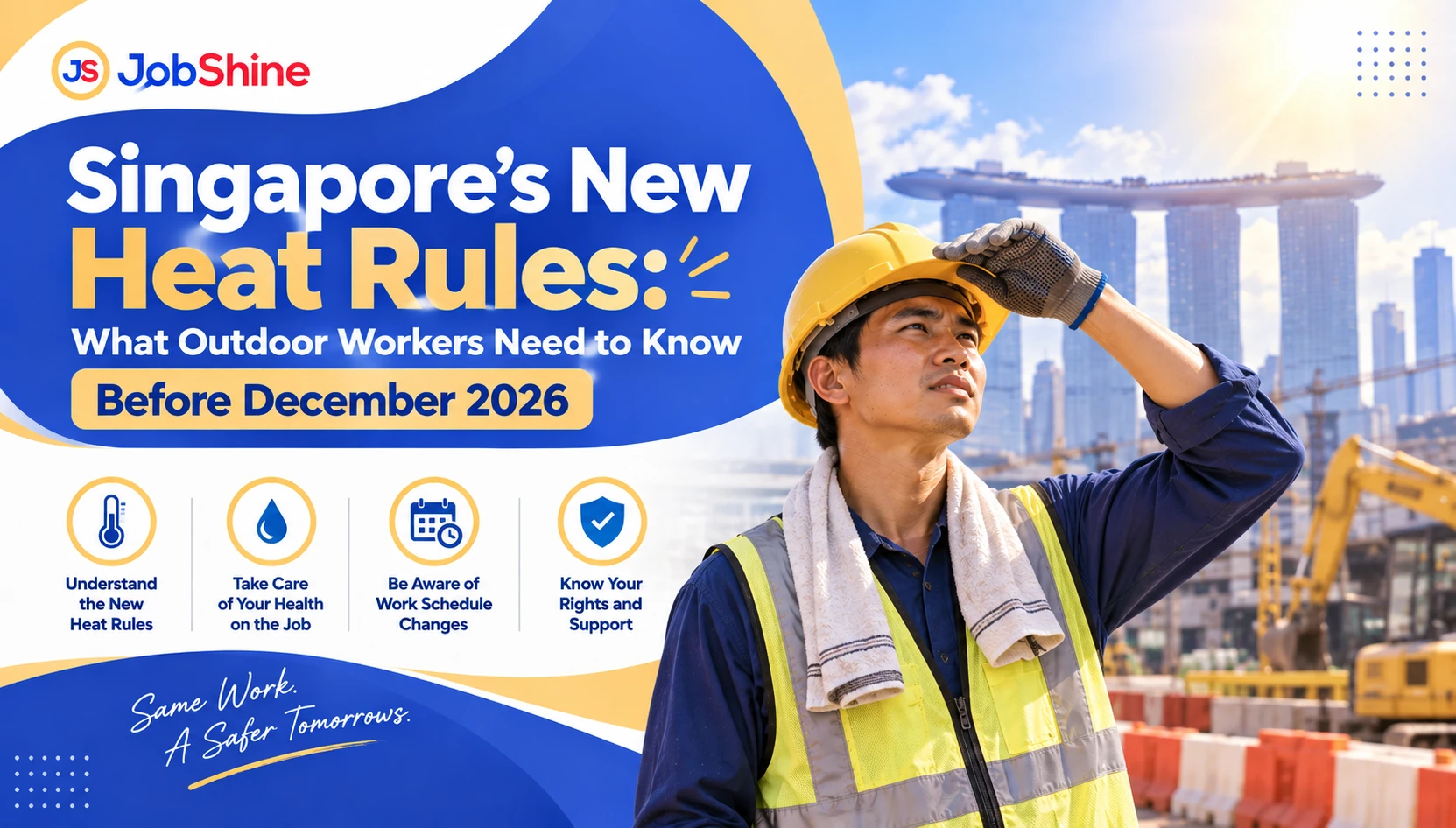
Singapore is introducing stronger protection for workers exposed to heat — and the changes will directly affect many people working outdoors.
From 1 December 2026, four measures that were previously recommended under Singapore's Heat Stress Management Framework will become mandatory for employers. The move comes as Singapore continues to strengthen workplace protection against rising heat risks.
For workers in construction, logistics, delivery, transport, and other outdoor roles — these changes are important to understand.
From December 2026, employers will be required by law to provide four key measures for workers exposed to heat:
MOM is also introducing a new recommended practice for employers to provide shaded rest areas that are well ventilated and well insulated or cooled.
These requirements are intended to make heat protection more consistent — and more enforceable — across all workplaces.
For many office employees, Singapore's hot weather may mean an uncomfortable commute or a warm afternoon.
For outdoor workers, the situation is very different.
Construction workers, drivers, delivery riders, logistics workers, and other frontline employees may spend several hours exposed to heat while performing physically demanding tasks.
Physical work can increase the body's heat load — particularly when workers are wearing protective equipment or working during the hotter parts of the day.
Heat management is no longer just a comfort issue — it is a workplace safety requirement.
One of the most important aspects of the new rules is that heat protection is not limited to hydration.
Employers will need to establish heat stress training programmes for workers exposed to heat. The training must cover:
Workers should be better prepared to recognise heat-related problems before they become serious — and employers are now legally responsible for making sure that happens.
The new measures build on existing requirements.
Depending on the Wet Bulb Globe Temperature (WBGT), employers may need to provide:
The December 2026 rules are a floor — not a ceiling. Employers should be doing everything necessary to keep workers safe, not just the minimum required.
If you work outdoors or in a physically demanding role, you have a right to these protections from 1 December 2026.
You should expect your employer to:
If something feels wrong — speak up. You can raise concerns with your supervisor, your company's safety officer, or report to MOM's Workplace Safety and Health division.
Your safety at work is a legal right — not a favour from your employer.
December 2026 is approaching. Employers should not wait until the last minute.
Steps to take now:
Compliance isn't just about avoiding penalties — it's about protecting the people who keep your operations running.
Looking for workers who take safety seriously — or looking for employers who do? Find verified roles and reliable candidates on www.jobshine.sg
#HeatStress #OutdoorWorkers #WorkplaceSafety #BlueCollar #SingaporeJobs #WorkerWellbeing #JobShine

